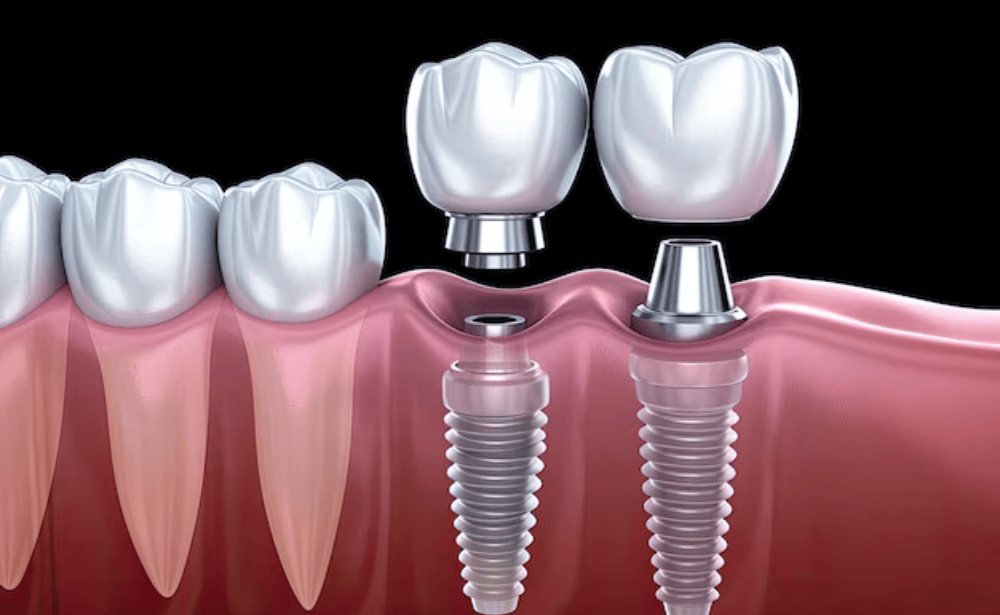
Dental implants represent one of the most innovative and effective advancements in modern dentistry, offering a permanent and natural-looking solution for individuals who have lost one or more teeth. Unlike traditional dentures or bridges, dental implants are designed to function exactly like real teeth by replacing not only the visible crown but also the root structure. This provides unmatched stability, durability, and comfort — giving patients the confidence to speak, eat, and smile without hesitation.
Dental implants are typically made of biocompatible titanium or high-strength zirconia, materials that safely integrate with the jawbone through a biological process known as osseointegration. Once placed, the implant fuses with the bone, creating a strong foundation capable of supporting various types of restorations — from single crowns to implant-supported bridges or full-arch prostheses such as All-on-4 and All-on-6 systems.
✔ Why Dental Implants Are Superior
Dental implants offer numerous advantages that make them the gold standard in tooth replacement:
-
Long-term durability: With proper care, implants can last a lifetime.
-
Natural look and feel: They mimic the appearance and function of natural teeth.
-
Bone preservation: Implants prevent the bone loss that occurs after tooth extraction.
-
Enhanced chewing ability: Allows patients to eat comfortably without dietary limitations.
-
Improved speech: Eliminates slipping issues associated with traditional dentures.
-
Better oral health: Unlike bridges, surrounding teeth do not need to be ground down.
-
Boosted confidence: Restores the patient’s natural smile and facial structure.
✔ The Dental Implant Process
The implant procedure involves several carefully planned stages to ensure maximum stability and long-term success:
-
Comprehensive evaluation:
Digital X-rays, panoramic imaging, and 3D CBCT scans are used to assess bone density and overall oral health. -
Treatment planning:
A personalized plan is created based on the number of missing teeth, bone quality, and the patient’s aesthetic expectations. -
Surgical placement:
The implant is inserted into the jawbone under local anesthesia or sedation. This procedure is typically quick and minimally invasive. -
Healing and osseointegration:
Over the following weeks or months, the implant integrates with the bone to create a firm foundation. -
Abutment placement:
Once healed, a small connector piece (abutment) is attached to the implant. -
Final restoration:
A custom-made crown, bridge, or full-arch prosthesis is placed to complete the treatment.
✔ Are You a Good Candidate?
Most individuals with missing teeth are suitable candidates for implants. Ideal candidates:
-
Have good general and oral health
-
Possess sufficient bone density
-
Do not smoke or are willing to reduce smoking
-
Maintain good oral hygiene habits
Even if bone loss has occurred, modern procedures like bone grafting, sinus lifting, and ridge augmentation can help create a stable foundation for implants.
✔ Aftercare and Maintenance
Dental implants require the same care as natural teeth:
-
Brushing twice a day
-
Regular dental check-ups
-
Avoiding excessive force (teeth grinding, biting hard objects)
-
Maintaining a healthy lifestyle
When properly maintained, dental implants offer one of the highest success rates in dentistry — often above 95–98%.
✔ Risks and Considerations
Although rare, potential complications may include:
-
Infection
-
Implant failure due to insufficient bone integration
-
Nerve irritation
-
Sinus complications (for upper jaw implants)
Your dentist will evaluate all risk factors to ensure the safest and most effective treatment plan.
✔ A Complete Smile Restoration
Dental implants do more than replace missing teeth — they restore quality of life. With their natural appearance, exceptional durability, and ability to preserve bone structure, implants offer a long-term, reliable solution for anyone seeking functional and aesthetic restoration.